
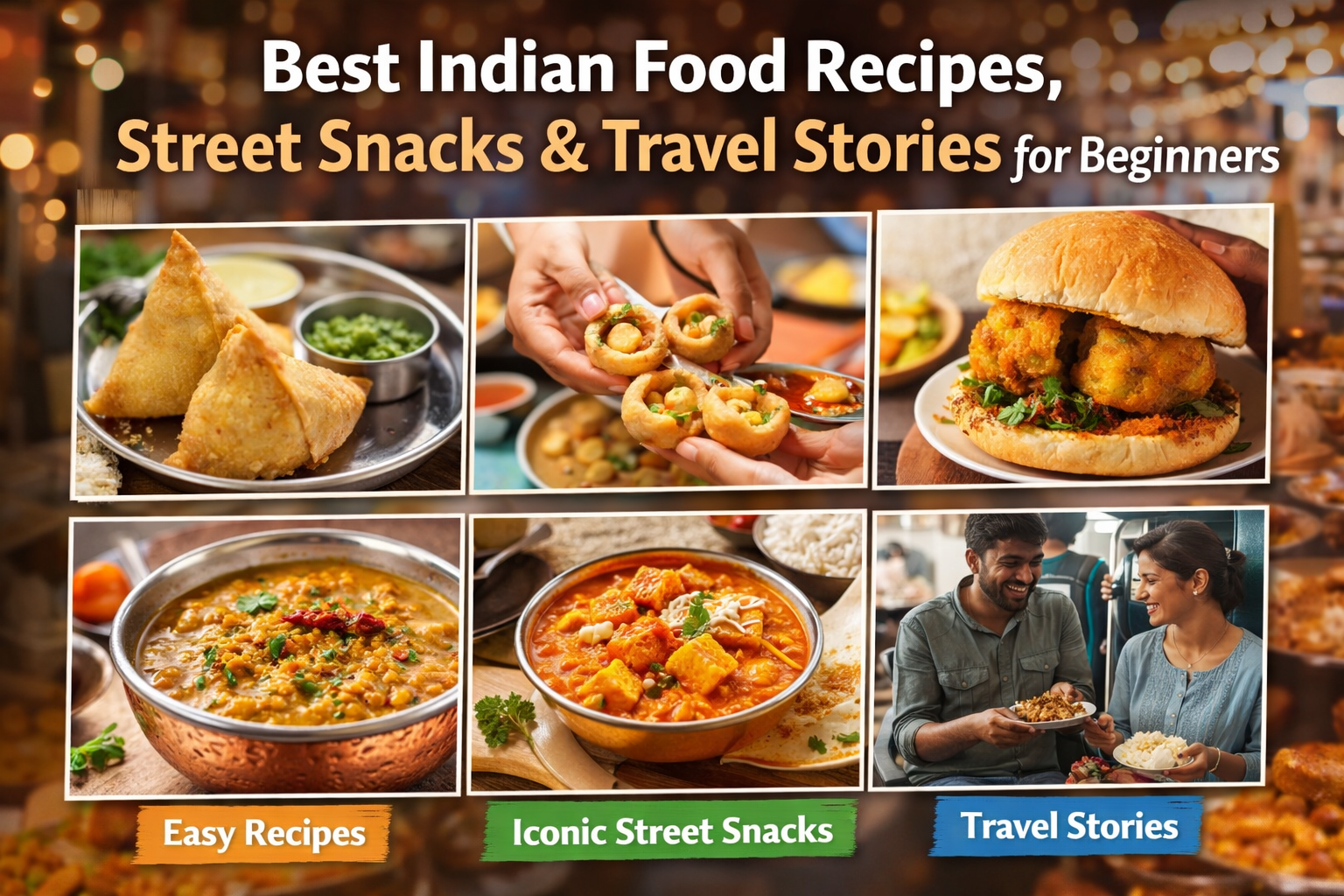
Best Indian Food Recipes If you love food but feel a little overwhelmed by “Indian cuisine”, you’re not alone. It’s rich, diverse, full of flavours—and honestly, it can look a bit intimidating from the outside. Where do you start? Which dishes are actually easy for beginners? And what about those irresistible street snacks you keep seeing on Instagram?
Think of this guide as your friendly food companion. You’ll walk through simple Indian recipes, beginner‑friendly street snacks, and fun little travel‑style stories that make the food come alive. By the end, you won’t just be hungry—you’ll be confident enough to try them yourself.
This article is written especially for beginners—people who are curious, hungry (literally and figuratively), and ready to explore India through its food, street snacks, and unforgettable travel moments. So grab a cup of chai, get comfortable, and let’s begin this delicious journey.
Why Indian Food and Travel Are Perfect for Beginners
Best Indian Food Recipes and travel might look overwhelming at first. So many spices, so many dishes, so many places—where do you even start? The good news is, India welcomes beginners with open arms.
Indian cuisine is incredibly diverse, but it’s also forgiving. You don’t need fancy tools or rare ingredients to start cooking. Similarly, traveling in India teaches you patience, adaptability, and curiosity—skills that grow with every trip.
Think of Indian food and travel like learning a new language. At first, you know just a few words. But soon, you’re forming sentences, telling stories, and laughing at your own mistakes.
Essential Indian Ingredients You Should Know
Before talking recipes, let’s quickly look at the building blocks. You don’t need a fancy pantry, just a few essentials you’ll use again and again.
-
Whole spices: Cumin seeds, mustard seeds, cloves, bay leaves.
-
Ground spices: Turmeric, red chilli powder, coriander powder, garam masala.
-
Base ingredients: Onions, tomatoes, ginger, garlic, green chilli.
-
Staples: Rice, wheat flour (for roti), lentils, chickpeas, potatoes.
Think of these as your “toolkit”. Once they’re at home, you can cook dozens of Indian dishes without running to the store every time.
Understanding Indian Cuisine: A Beginner’s Overview
Before jumping into recipes and snacks, let’s understand what makes Indian food so special.
Indian cuisine is built on:
-
Spices (not just chili—there’s flavor, aroma, and balance)
-
Regional diversity (north, south, east, west—all different)
-
Fresh ingredients
-
Home-style comfort cooking
Indian food isn’t about burning your tongue. It’s about layers of flavor, slow cooking, and food that feels like a warm hug after a long day.
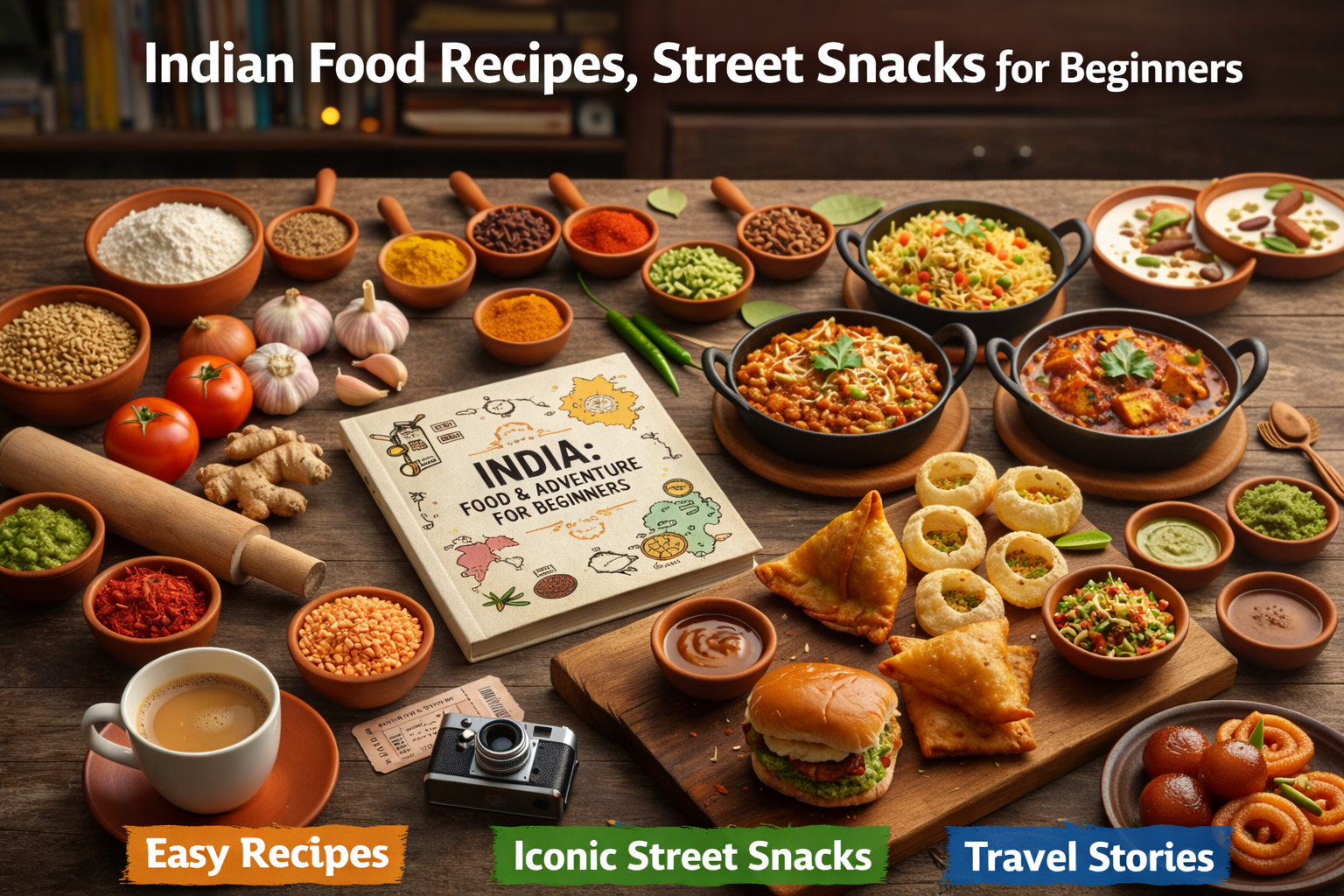
Essential Indian Spices Every Beginner Should Know
Spices are the heart of Indian cooking. But don’t panic—you don’t need a suitcase full of them.
Must-Have Spices for Beginners
-
Turmeric – earthy, healing, and essential
-
Cumin – warm and nutty
-
Coriander – mild and citrusy
-
Red chili powder – adjustable heat
-
Garam masala – a comforting spice blend
Start small. Like learning to ride a bicycle, balance comes with practice.
Best Indian Food Recipes for Beginners (Easy & Delicious)
Let’s get to the kitchen. These beginner-friendly Indian recipes are simple, comforting, and hard to mess up.
Dal Tadka: The Ultimate Beginner Indian Recipe
If Indian food had a heartbeat, dal would be it.
Dal tadka is a lentil dish that’s:
-
Easy to cook
-
Affordable
-
Nutritious
-
Deeply satisfying
It’s the kind of food Indians grow up with. Serve it with rice or roti, and you’ve got a complete meal that feels like home—even if you’re thousands of miles away.
Vegetable Pulao: One Pot, Endless Comfort
Vegetable pulao is perfect for beginners who want flavor without stress.
Why beginners love it:
-
One pot cooking
-
Flexible ingredients
-
Mild yet aromatic
It’s like the Indian version of comfort rice—simple, fragrant, and always welcome.
Paneer Butter Masala: Restaurant Taste at Home
Paneer butter masala sounds fancy, but it’s surprisingly beginner-friendly.
Soft paneer cubes swim in a creamy tomato gravy that tastes indulgent without being complicated. This dish teaches beginners how Indian gravies work—and once you learn one, you unlock dozens more.
Indian Street Snacks: Where Flavor Explodes
Street food is where Indian cuisine truly comes alive. Loud, colorful, chaotic—and absolutely irresistible.
For beginners, Indian street snacks are like small adventure bites. Each one tells a story.
Pani Puri: A Bite-Sized Flavor Bomb
Pani puri isn’t just food—it’s an experience.
You crack a crispy shell, fill it with potato and chutneys, dip it into tangy spiced water, and pop it into your mouth. Boom—sweet, sour, spicy, crunchy, all at once.
It’s messy. It’s fun. And beginners fall in love instantly.
Samosa: India Most Loved Snack
Golden, crispy, and filled with spiced potatoes—samosas are beginner-friendly street food royalty.
You’ll find them:
-
At railway stations
-
On street corners
-
In home kitchens
Pair it with chai, and you’ve got a snack that feels like a warm conversation.
Vada Pav: Mumbai Street Food Hero
Vada pav is Mumbai in a bun.
A spicy potato fritter tucked into soft bread, layered with chutneys. Simple ingredients, bold flavors. For beginners, it’s a great introduction to how Indian street food turns basic food into magic.
Chaat: Sweet, Sour, Spicy Harmony
Chaat is chaos—in the best way possible.
Papdi chaat, aloo chaat, dahi chaat—they all balance sweetness, spice, crunch, and creaminess. Beginners love chaat because no two bites taste exactly the same.
Indian Travel Stories: Learning Through the Journey
Food tastes better when it’s tied to memory. And India gives you plenty.
Traveling through India isn’t always smooth—but that’s where the best stories come from.
First Train Journey: A Moving Classroom
Ask anyone who’s traveled in India, and they’ll tell you—train journeys change you.
You share food with strangers, overhear conversations in five languages, and watch landscapes shift outside the window. Beginners quickly learn that Indian travel is less about schedules and more about stories.
Eating with Locals: The Best Food Isn’t on Menu
Some of the best meals in India aren’t in restaurants.
They’re in:
-
Someone’s home
-
A roadside dhaba
-
A tiny kitchen behind a shop
Beginners who say “yes” to home-cooked meals often leave with recipes—and lifelong memories.
Street Food Adventures: Trust, Taste, Repeat
Trying street food in India require courage and curiosity.
You learn to:
-
Follow the crowd
-
Trust your instinct
-
Eat where food is fresh
Beginners soon realize that street food vendors are artists, not just sellers.
Regional Indian Food Beginners Should Explore
Breakfast is the best place to start: low pressure, quick cooking and familiar flavours.
-
Masala Poha: Flattened rice cooked with onions, peas, peanuts and mild spices. Light, filling, and very forgiving—even if you’re new to cooking.
-
Besan Chilla: Savoury pancakes made from gram flour with chopped onion, tomato and coriander. It’s like an Indian twist on an omelette without eggs.
-
Upma or Dalia (Broken Wheat): Soft, savoury, porridge‑like dish loaded with veggies. Great if you want something warm and comforting.
Most of these use one pan, basic chopping and simple tempering—perfect for beginners experimenting in the kitchen.
India changes every few hundred kilometer—and so does the food.
North India
Butter chicken, naan, rajma, chole—rich, comforting flavors.
South India
Dosa, idli, sambar—light, fermented, and healthy.
West India
Dhokla, pav bhaji, vada pav—snacks with personality.
East India
Rice, fish, sweets—subtle and soulful.
Each region adds a new chapter to your food journey.
Indian Desserts Beginners Will Love
Don’t skip dessert. Ever.
Gulab Jamun
Soft, syrupy, and impossible to eat just one.
Kheer
Rice pudding with cardamom and nuts—simple and soothing.
Jalebi
Crispy, sugary spirals best eaten hot.
Indian desserts are sweet endings to bold meals.
Cooking Indian Food at Home: Beginner Tips
Start small. Cook often. Taste constantly.
Simple Tips
-
Don’t fear spices—measure them
-
Follow one recipe at a time
-
Use fresh ingredients
-
Adjust spice levels to your comfort
Cooking Indian food is like dancing—you find your rhythm eventually.
Mistakes Beginners Commonly Make (And How to Avoid Them)
Everyone makes mistakes. That’s part of the fun.
Common beginner mistakes:
-
Overusing spices
-
Cooking on very high heat
-
Skipping tasting
-
Rushing recipes
Slow down. Indian cooking rewards patience.
Why Indian Food Connects People Across Cultures
Indian food travels well—not just across borders, but across hearts.
It brings people together at:
-
Family tables
-
Street corners
-
Train compartments
Beginners often start with curiosity and end with emotional connection.
Indian Food, Travel, and Stories: A Perfect Trio
Food fills your plate. Travel fills your eyes. Stories fill your heart.
When you combine all three, you don’t just learn about India—you feel it.
Conclusion
Best Indian Food Recipes, street snacks, and travel stories offer beginners more than just new tastes—they offer new perspectives. From cooking simple dal at home to biting into your first pani puri on a crowded street, every experience adds a layer to your journey.
Indian food teaches balance. Indian travel teaches patience. And Indian stories teach humility.
If you’re a beginner, don’t try to know everything at once. Start with one recipe, one snack, one trip, one story. Let your curiosity lead the way. Because once Indian food and travel enter your life, they don’t just stay on your plate or in your passport—they stay in your memory.
Leave a Reply