

Detox diet at home. It’s one of those words you’ve probably heard a hundred times—on Instagram reels, wellness blogs, gym conversations, or from that one friend who swears lemon water changed her life. But let’s pause for a second and ask the real question: does a detox diet at home actually work, or is it just another wellness buzzword?
The truth lies somewhere in the middle. Detoxing isn’t magic. It won’t erase years of unhealthy habits overnight. But when done sensibly, it can absolutely help your body reset, recharge, and feel lighter—both physically and mentally.
So if you’ve been feeling bloated, sluggish, inflamed, or just “off,” this guide will walk you through how detox works, whether detox diets are effective, and easy, safe ways to detox at home—without starving yourself or following extreme rules.
Let’s break it all down, step by step, in plain English.
What Is Detoxification, Really?
Here’s something most people don’t realize: your body is already detoxing 24/7.
Your liver, kidneys, lungs, skin, and digestive system work together like a well-trained cleaning crew. They filter toxins, neutralize harmful substances, and flush waste out through urine, sweat, breath, and stool.
So technically speaking, you don’t need a detox diet to detox.
But—and this is a big but—modern lifestyles overload this natural system.
Think about it:
-
Processed food
-
Excess sugar
-
Smoking
-
Environmental pollution
-
Medications
-
Chronic stress
-
Lack of sleep
All of this adds pressure on your detox organs, especially the liver and kidneys. Over time, they can become sluggish—not broken, just overworked. That’s where supportive detox practices come in.
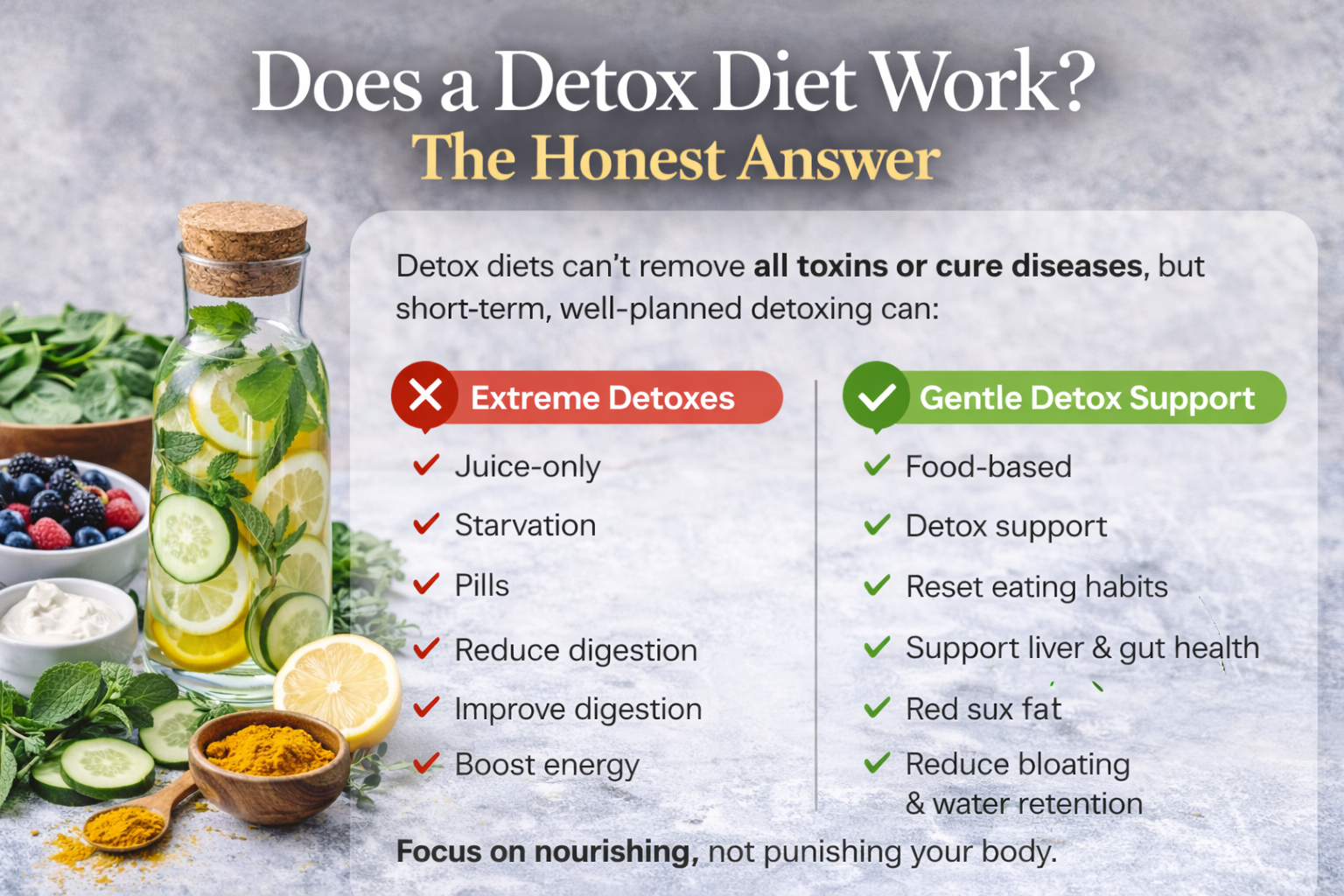
Does a Detox Diet Work? The Honest Answer
Let’s clear the air. Detox diet at home
A detox diet won’t magically remove all toxins, cure diseases, or replace medical treatment. Modern science is clear on that.
However Detox diet at home
A short-term, well-planned detox can:
-
Reduce inflammation
-
Improve digestion
-
Boost energy levels
-
Help reset eating habits
-
Support liver and gut health
-
Reduce bloating and water retention
So yes—detox diets can work, if they focus on nourishing the body rather than punishing it.
The key is understanding the difference between:
-
Extreme detoxes (juice-only, starvation, pills)
-
Gentle, food-based detox support
We’re firmly on team gentle and sustainable.
How Detoxification Is Claimed to Work
Supporters of detox practices believe that detoxing helps the body by:
-
Supporting the liver and kidneys in toxin elimination
-
Improving blood circulation
-
Reducing chronic inflammation (a root cause of many diseases)
-
Boosting metabolism
-
Supporting weight management
-
Balancing blood sugar and cholesterol levels
Detox methods promoted in alternative medicine vary widely. Some are questionable, but many simple lifestyle-based detox habits do help, even if their effects differ from person to person.
Think of detox like giving your body a breathing space—a chance to recover from overload.
Why Home Detox Is the Safest Option
Medical detoxification exists—and it’s essential in certain situations.
For example:
-
Alcohol detoxification
-
Drug detoxification
-
Dialysis (for kidney failure)
These are serious medical interventions and should never be confused with lifestyle detoxes.
Home detox, on the other hand, is about removing irritants and adding nourishment. No pills, starvation. and risk.
And that’s exactly what makes it effective.
The Basic Formula for Detoxing at Home
According to nutritionist and entrepreneur Sandhya Gugnani, an effective home detox follows one simple rule:
Remove what harms. Add what heals.
Sounds simple, right? That’s because it is.
Foods and Habits to Cut Down During Detox
To allow your body to detox efficiently, certain things need to take a back seat—at least temporarily.
Sugar in All Forms
This includes:
-
White sugar
-
Brown sugar
-
Artificial sweeteners
-
Sugary drinks
-
Desserts
Sugar fuels inflammation and disrupts gut health. Reducing it alone can make a massive difference.
Processed and Packaged Foods
If it comes in a shiny packet, it’s probably loaded with:
-
Preservatives
-
Artificial flavors
-
Trans fats
Avoid items like:
-
Chips
-
Instant noodles
-
Biscuits
-
Ready-made sauces
-
Packaged snacks
Your body deserves real food, not chemistry experiments.
Fried, Oily, and Genetically Modified Foods
These foods slow digestion and stress the liver. During detox, simplicity is your best friend.
Alcohol (Non-Negotiable)
Even red wine gets a no.
Alcohol is one of the biggest burdens on the liver. If detox is the goal, alcohol has to go—completely.
Excess Caffeine
Swap coffee and sugary milk tea for:
-
Green tea
-
Herbal teas
Your nervous system will thank you.
How Much Can You Detox in One Week?
That depends on two things:
-
How overloaded your body is
-
How sincerely you follow the plan
A week won’t turn you into a new person—but it can:
-
Reduce bloating
-
Improve digestion
-
Increase energy
-
Improve sleep
-
Clear brain fog
Think of it as a reset button, not a miracle cure.
Expert Insight: Cutting Inflammation Is Key
Nutrition expert Kavita Devgn puts it perfectly:
“The best way to detox is to cut out inflammation-causing foods like fried items, sugar, junk, processed foods, and refined flours, and replace them with antioxidant-rich fruits and vegetables.”
She also recommends:
-
Fasting once a week
-
Eating clean, simple meals
Inflammation is the silent troublemaker. Reduce it, and half your problems disappear.
Elimination Phase: What to Avoid for 7 Days
For one full week, try saying no to:
Meat
Meat takes longer to digest and can burden the gut during detox.
Packaged Foods
Avoid everything that comes out of a packet:
-
Chips
-
Biscuits
-
Jams
-
Butter
-
Cheese
-
Ketchup
Excess Fat and Sugar
Limit both to 1–2 teaspoons a day.
Alcohol
Completely eliminated. No exceptions.
Coffee
Replace it with green tea or herbal infusions.
Detox Inclusions: What to Add Instead
Now for the good part—what you can enjoy.
- Intermittent Fasting
Try a 14–16 hour fasting window.
Drink plenty of water during this time.
This gives your digestive system time to repair itself.
- Detox Water
Sip throughout the day:
-
Water + lemon
-
Mint
-
Cucumber
-
Ginger
This helps reduce water retention and improves hydration.
- Drink Enough Water
Aim for 3.5 to 4 litres daily.
Hydration is the backbone of detox.
- Seasonal Fruits and Green Vegetables
Load your plate with:
-
Leafy greens
-
Citrus fruits
-
Berries
-
Cucumbers
-
Carrots
Nature knows best.
- Early Dinner & Walking
Eat dinner by 7–8 PM.
After every meal, walk 1,000 steps.
Chew your food slowly—it matters more than you think.
- Daily Brisk Walk
At least 45 minutes.
Walking is one of the best exercises for liver health.
- Yoga & Pranayama
Even 5–7 rounds of Surya Namaskar and deep breathing can stimulate detox organs.
- Warm Lemon Water
Drink 2 glasses on an empty stomach every morning.
It gently wakes up your digestive system.
- Homemade Curd
Include it in at least two meals a day.
It supports gut bacteria and digestion.
- Triphala at Night
Take Triphala powder with warm water before bed.
It supports digestion and bowel movement.
- Home-Cooked Food
Fresh, simple meals with minimal oil.
No shortcuts. No excuses.
Foods That Support Natural Detox
A healthy detox diet should include:
-
Whole, unprocessed foods
-
High-fiber vegetables
-
Antioxidant-rich fruits
-
Nuts and seeds
-
Herbal teas
You can make water slightly alkaline by adding:
-
Lemon
-
Celery
-
Cinnamon
Most importantly, your detox plan should still provide enough calories to sustain you.
Starving isn’t detoxing—it’s stressing the body.
Results You Can Expect
Follow this plan for 7–15 days, and you’ll likely notice:
-
Improved digestion
-
Better energy
-
Reduced bloating
-
Clearer skin
-
Better sleep
-
Improved mood
However, if you:
-
Have a medical condition
-
Are pregnant
-
Are on prescribed medication
Always consult your doctor or nutritionist first.
Conclusion
So, does a Detox diet at home work?
Yes—but only when it’s gentle, food-based, and realistic.
Detoxing isn’t about punishment or perfection. It’s about giving your body a break from overload and supporting the systems that already work tirelessly for you.
Think of detox as a reset, not a restart. You don’t need extremes to feel better. Sometimes, all your body asks for is real food, enough water, movement, rest, and a little kindness.
Do that consistently, and your body will do the rest—naturally.
Leave a Reply