


Cheap Travel Tips in India, Let’s be honest—most people believe traveling across India requires a heavy wallet. Flights, hotels, food, tickets… it all sounds expensive, right? But here’s the truth: India is one of the most budget-friendly travel destinations in the world if you know how to plan smartly.
Cheap travel isn’t about missing out on experiences or surviving on instant noodles. It’s about making clever choices, understanding local systems, and traveling like a local instead of a tourist. When you swap expensive habits for smarter alternatives, suddenly you can explore more cities, eat more local food, and stay longer without emptying your bank account.
In this guide, we’ll walk through practical, real-life cheap travel tips in India—covering transport, food, accommodation, planning strategies, and insider tricks. Think of this article as your friendly travel companion helping you stretch every rupee while still having an unforgettable journey.
Why India Is Perfect for Budget Travelers
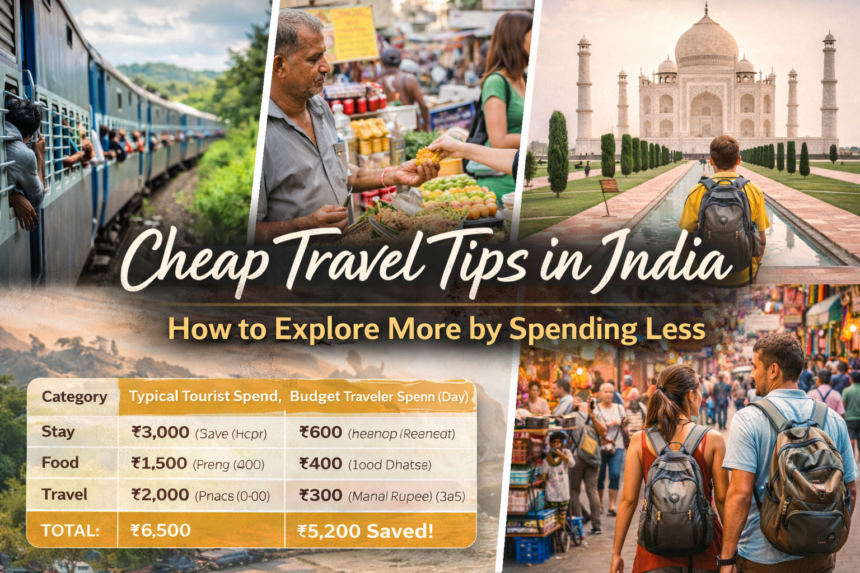
| Category | Typical Tourist Spend (Day) | Budget Traveler Spend (Day) | Your Daily Saving |
| Stay | ₹3,000 (3-Star Hotel) | ₹600 (Hostels/Homestays) | ₹2,400 |
| Food | ₹1,500 (Fancy Cafe) | ₹400 (Local Dhaba) | ₹1,100 |
| Travel | ₹2,000 (Private Cab) | ₹300 (Metro/Sleeper Class) | ₹1,700 |
| TOTAL | ₹6,500 | ₹1,300 | ₹5,200 Saved! |
India is incredibly diverse—not just culturally but economically. You can find luxury experiences, but you can also travel comfortably on a small budget if you understand how things work locally.
Public transport is extensive and affordable. Street food is delicious and inexpensive. Homestays and hostels are available in almost every major city. Even many tourist attractions have low entry fees compared to international destinations.
Another big advantage? The variety. You can visit mountains, beaches, deserts, forests, and modern cities without leaving the country. With smart planning, one budget trip can feel like multiple international adventures combined.
Plan Smart Before You Travel: Budgeting Starts at Home
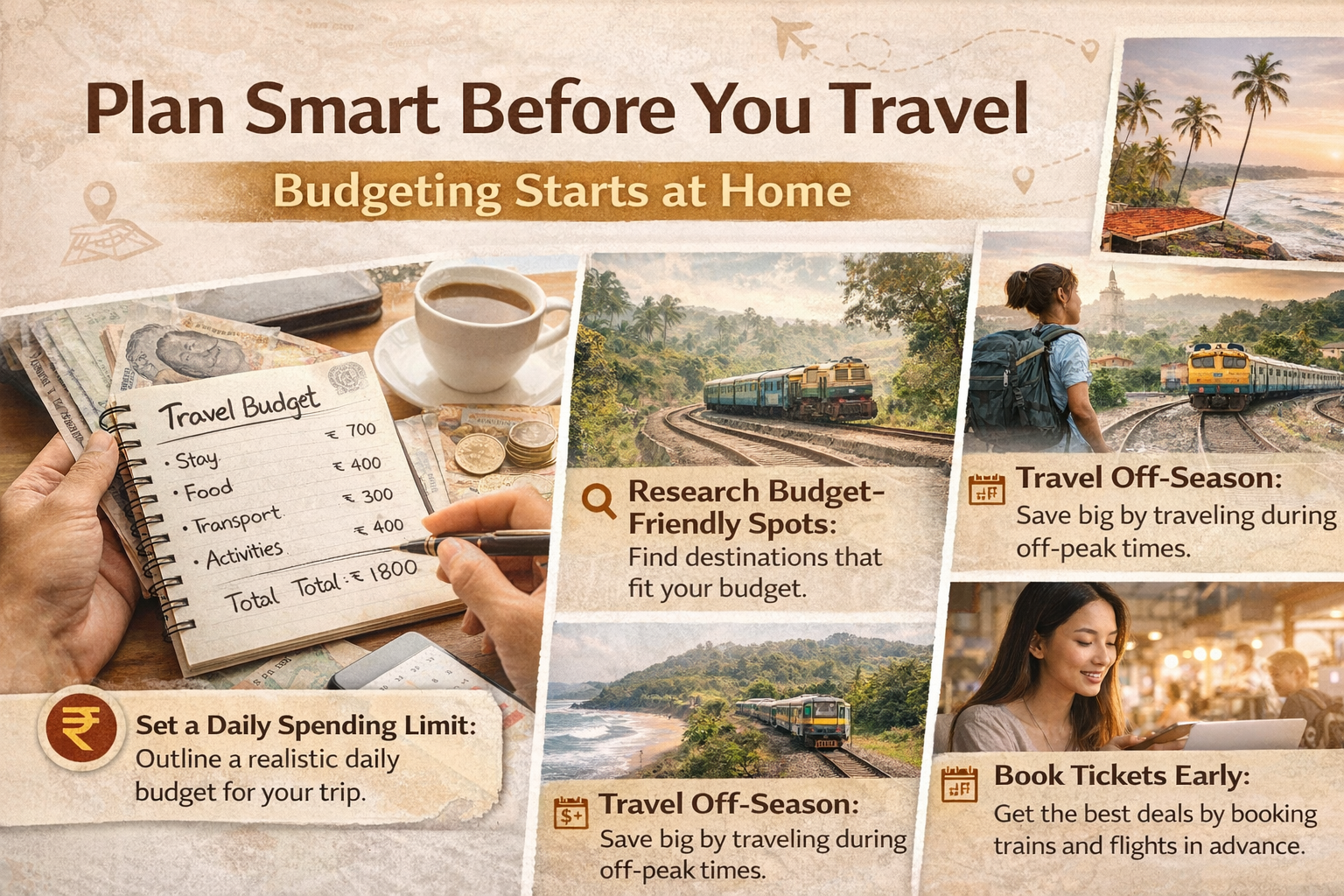
Good travel doesn’t begin at the airport—it begins at your planning desk. Before booking anything, outline your daily spending limit. Ask yourself: how much can you realistically spend each day on food, transport, and activities?
Research destinations that match your budget. Some places, like Goa during peak season or certain hill stations during holidays, can be expensive. But travel during off-season months, and prices often drop significantly.
Booking early can also save money on trains, buses, and flights. Last-minute bookings are usually the most expensive. Think of planning as building a strong foundation—once it’s set, your trip becomes smoother and cheaper.
Travel During Off-Season for Massive Savings
Timing is everything. Traveling during peak tourist seasons means higher hotel rates, crowded attractions, and expensive transport. But if you shift your travel dates slightly, you can save a surprising amount.
For example, visiting beaches during early monsoon or hill stations just before winter can cut accommodation prices by half. Attractions are less crowded, locals are more relaxed, and you often get better deals on tours and experiences.
Off-season travel is like shopping during a clearance sale—you get almost the same product for a fraction of the cost.
Use Budget-Friendly Transportation Options
Transportation is one of the biggest travel expenses—but also the easiest area to save money.
Indian Railways is one of the most affordable ways to travel long distances. Sleeper class or second-class seating can drastically reduce travel costs while giving you a real local experience.
State buses and local buses are extremely cheap and connect even remote areas. Overnight buses can even save you a night’s accommodation cost.
For short distances within cities, use shared auto-rickshaws, local metro systems, or walking. Not only do you save money, but you also get a deeper feel for the city’s daily life.
Find Affordable Accommodation Without Sacrificing Comfort
You don’t need expensive hotels to sleep well during your travels. India offers a wide range of budget accommodation options that are clean, safe, and welcoming.
Hostels are popular among backpackers and solo travelers. They provide affordable beds, social spaces, and opportunities to meet fellow travelers. Homestays offer a more local experience and often include home-cooked meals.
Booking platforms frequently offer discounts, especially if you book early or stay longer. Always read reviews carefully and compare prices across platforms before finalizing your stay.
Eat Like a Local and Save Big on Food
Food is one of the best parts of traveling in India—and also one of the easiest ways to save money. Instead of dining at tourist-focused restaurants, explore local eateries and street food stalls.
Street food markets often serve authentic regional dishes at very low prices. From chaat in Delhi to vada pav in Mumbai or dosa in South India, local food is not only affordable but incredibly flavorful.
Look for places crowded with locals—that’s usually a sign of good taste and fair pricing. Eating local is like unlocking a secret menu that tourists often miss.
Choose Free and Low-Cost Attractions
Not every memorable experience requires an expensive ticket. Many of India’s most beautiful spots—temples, markets, beaches, hiking trails, parks, and heritage streets—are either free or extremely affordable.
Walking tours, cultural festivals, local markets, and public events can offer rich experiences without costing much. Museums and historical monuments often have lower entry fees for Indian citizens or special discount days.
Sometimes, the best travel moments come from simply wandering through a lively street, watching local life unfold around you.
Travel Light to Avoid Extra Expenses
Packing light isn’t just convenient—it’s economical. Heavy luggage can lead to airline baggage fees, expensive taxi rides, and unnecessary stress.
Carry versatile clothing that can be mixed and matched. A small backpack encourages you to move easily between buses, trains, and budget accommodations.
Think of your bag as your travel home. The lighter it is, the easier—and cheaper—your journey becomes.
Use Technology to Find Deals and Discounts
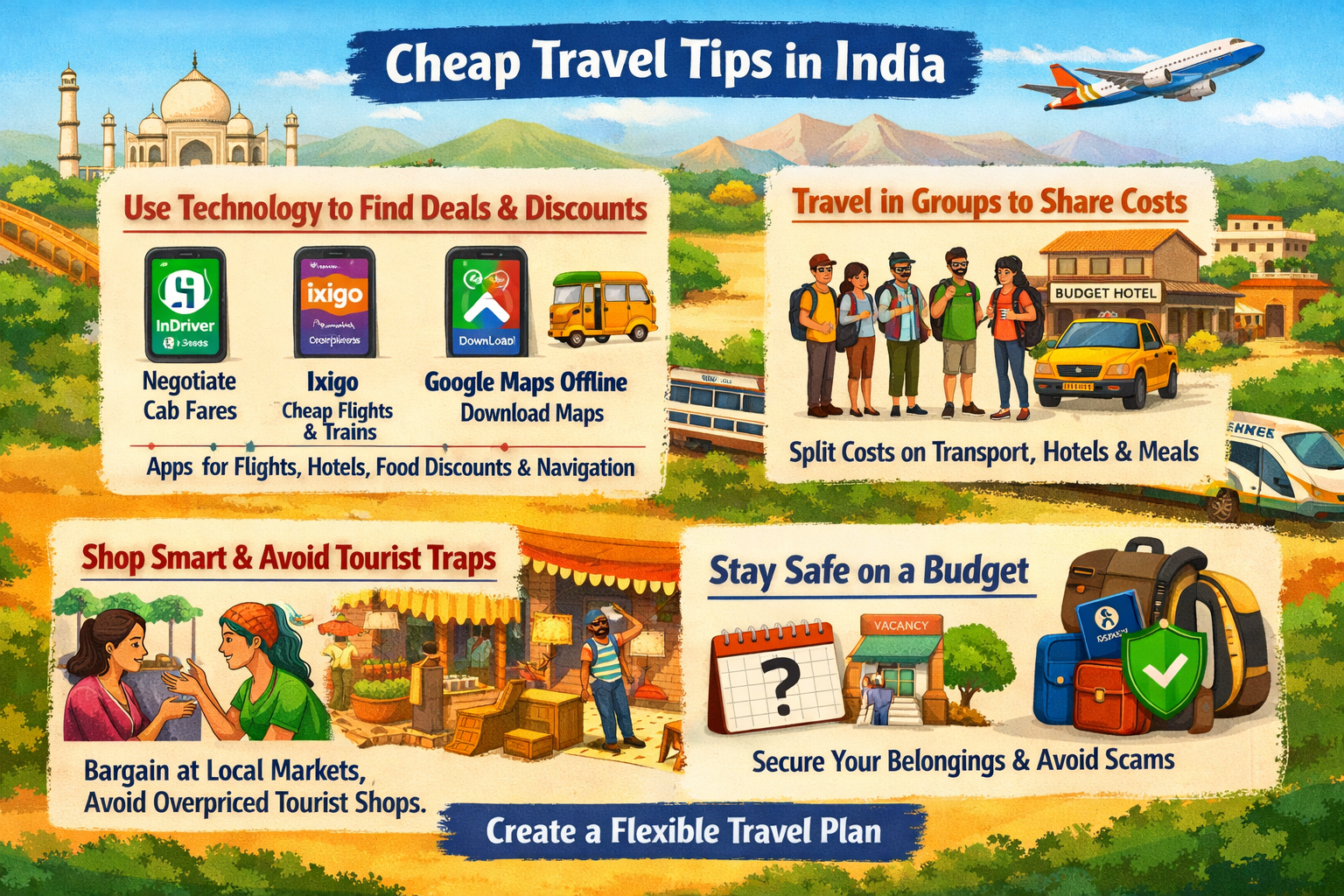
Smartphone apps can be powerful tools for cheap travel in India. Price comparison apps help you find the cheapest flights, trains, and hotels. Cheap Travel Tips in India
Food delivery apps often have discounts and coupons for local restaurants. Navigation apps help you avoid expensive tourist traps and find hidden gems recommended by locals.
Technology is like having a digital travel assistant—it keeps you informed, organized, and ready to grab deals when they appear.
Essential Budget Apps:
-
Indriver: Negotiate your own cab fares directly with drivers.
-
Ixigo: Best for train seat predictions and cheap flight alerts.
-
Google Maps (Offline): Download city maps to save data and avoid expensive tourist guides.
Travel in Groups to Share Costs
Traveling with friends or family can significantly reduce expenses. Shared accommodation, group transport bookings, and splitting meals make travel more affordable.
Even hiring a taxi for a day trip becomes cheaper when divided among multiple people. Group travel also creates a sense of safety and shared memories.
Of course, solo travel has its own charm—but when your goal is to save money, teamwork can make a big difference.
Shop Smart and Avoid Tourist Traps
Tourist markets often have higher prices. Instead, explore local markets where residents shop daily. Bargaining is common in many parts of India, so don’t be shy about negotiating respectfully.
Avoid impulse buying. Souvenirs may look tempting, but unnecessary purchases can quickly increase your travel budget.
A good rule of thumb: if you see more tourists than locals in a shop, prices are probably inflated.
Stay Safe While Traveling on a Budget
Cheap travel doesn’t mean careless travel. Always prioritize safety. Keep copies of important documents, use secure payment methods, and avoid unsafe areas at night.
Research common scams in your destination city and stay aware of your surroundings. Budget travel is enjoyable only when you feel safe and confident throughout your journey.
Create a Flexible Travel Plan
Rigid travel schedules can lead to unnecessary expenses. Allow room for changes and spontaneous decisions. Sometimes last-minute local tips lead you to cheaper accommodations or hidden attractions.
A flexible itinerary is like an open road—it gives you the freedom to adjust plans based on weather, budget, and local opportunities.
Conclusion
Cheap Travel Tips in India are not about cutting corners—they’re about making smarter decisions. From choosing local transport and affordable stays to eating street food and exploring free attractions, every small step adds up to big savings.
India’s diversity makes it an ideal destination for budget explorers. With the right mindset and planning, you can travel longer, see more places, and immerse yourself in authentic local culture without overspending.
So ask yourself: where will your next low-cost adventure begin? Maybe a hidden village, a bustling city street, or a quiet beach waiting to be discovered. Pack your curiosity, plan wisely, and let India surprise you—without surprising your wallet.