


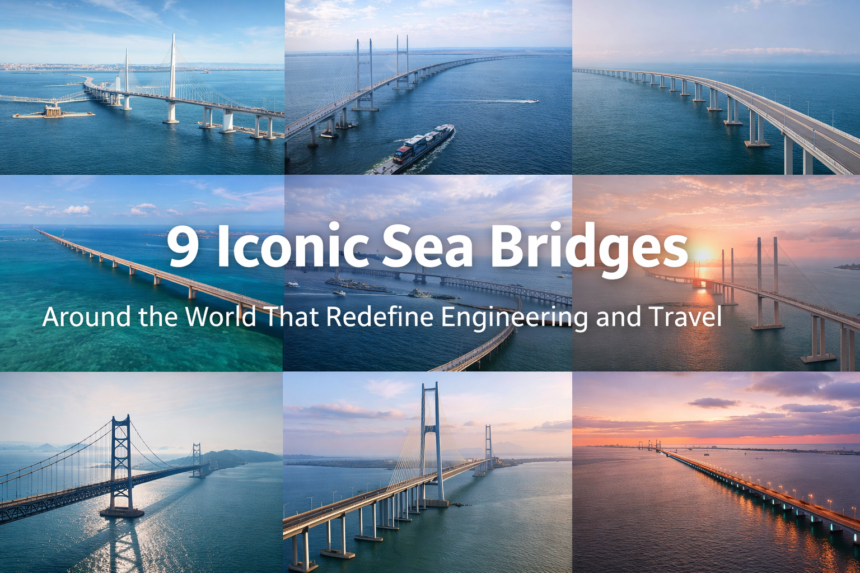
Iconic Sea Bridges have something almost magical about them. Driving over a bridge with nothing but open sea on both sides feels like floating. These iconic ocean bridges aren’t just slabs of concrete and steel—they are bold statements of human ambition, proving that when geography says “no,” engineering replies, “watch this.”
Whether you’re someone who enjoys long, peaceful drives, an architecture buff who loves structural brilliance, or simply a traveler who finds calm in the endless blue of the ocean, sea bridges have a unique pull. They don’t just connect two pieces of land; they connect people, economies, cultures, and sometimes even dreams.
From record-breaking lengths to jaw-dropping designs, these bridges transform how we move across water while offering views that linger in memory long after the journey ends. Let’s take a deep dive into nine of the most iconic sea bridges around the world—each one a marvel in its own right.
Why Iconic Sea Bridges Capture Our Imagination
Before we get into the list, let’s pause for a second. Why do Iconic Sea Bridges feel so special?
Maybe it’s the contrast—solid engineering cutting through something as fluid and unpredictable as the sea. Or maybe it’s the sense of scale. When a bridge stretches so far that land disappears behind you, it reminds you just how bold human innovation can be.
Iconic Sea Bridges aren’t just about convenience. They reshape trade routes, cut travel times dramatically, and often become symbols of national pride. In many cases, they redefine entire regions.
Now, let’s explore the bridges that do exactly that.
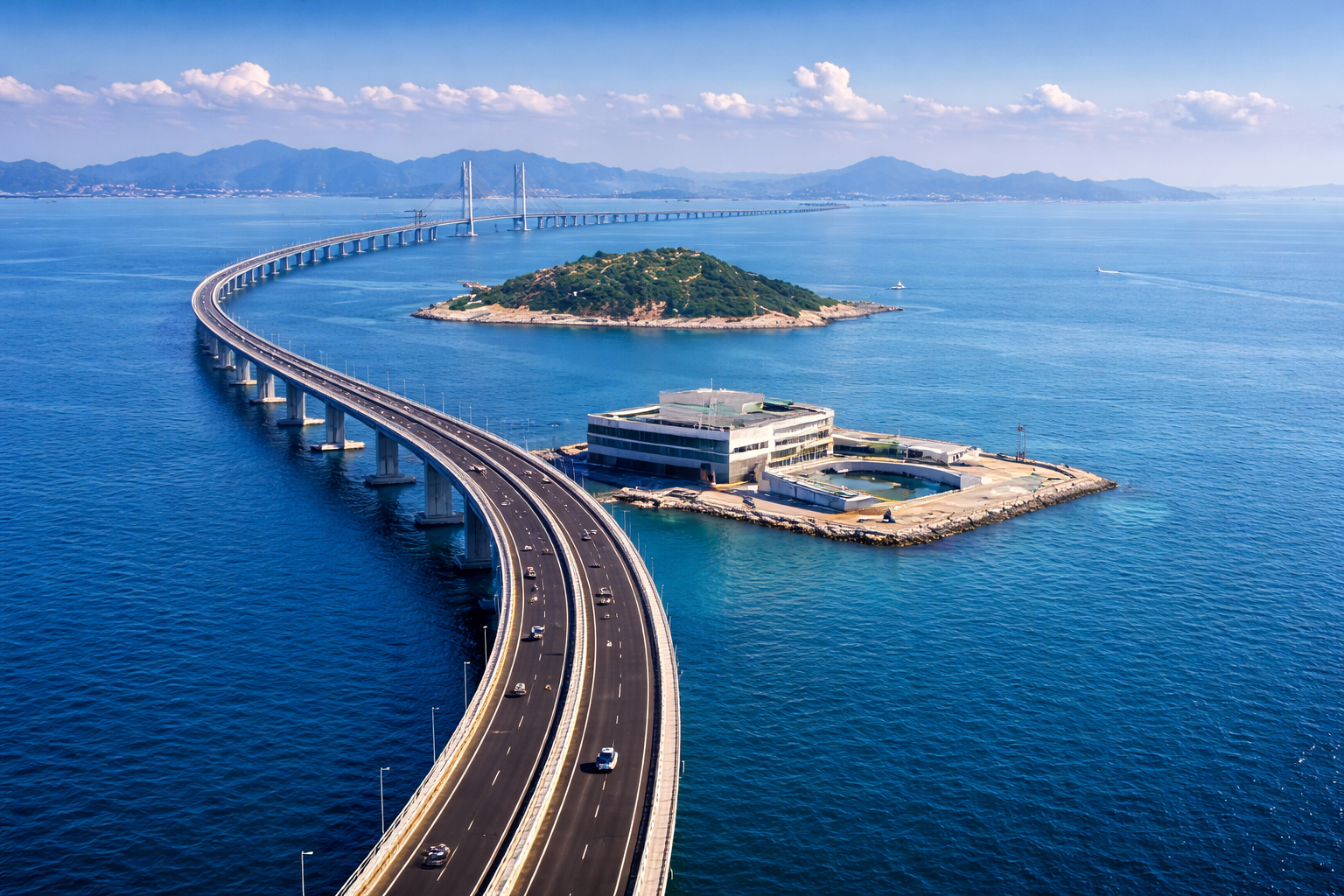
1. Hong Kong–Zhuhai–Macau Bridge, China – The World’s Longest Iconic Sea Bridge
When it comes to sea bridges, this one doesn’t just lead the pack—it leaves everyone else far behind.
Stretching an astonishing 55 kilometers, the Hong Kong–Zhuhai–Macau Bridge is the longest sea-crossing bridge in the world. But calling it “a bridge” almost feels like an understatement. It’s actually a complex network of bridges, undersea tunnels, and artificial islands spanning the Pearl River Delta.
What makes it extraordinary isn’t just its length, but its purpose. This bridge dramatically cuts travel time between Hong Kong, Zhuhai, and Macau, boosting economic integration across the region. Built to withstand typhoons, earthquakes, and heavy marine traffic, it’s a masterclass in modern engineering.
Driving across it feels less like a commute and more like a journey through the future.
2. Øresund Bridge, Denmark–Sweden
If elegance had a physical form, it might look a lot like the Øresund Bridge.
Connecting Copenhagen in Denmark to Malmö in Sweden, this nearly 8-kilometer-long structure is famous for its clever design. It begins as a sleek cable-stayed bridge and then—almost magically—dives into an underwater tunnel.
Why the tunnel? Simple. To allow ships to pass freely and planes to land safely at Copenhagen Airport nearby.
The transition from bridge to tunnel is seamless, and the experience of crossing borders without even realizing it feels oddly poetic. One moment you’re in Denmark; the next, Sweden welcomes you. No drama—just brilliant design doing its job quietly and beautifully.
3. Jiaozhou Bay Bridge, China
China appears again on this list, and for good reason.
The Jiaozhou Bay Bridge stretches over 41 kilometers, forming a massive T-shaped structure that links Qingdao with Huangdao Island. Supported by more than 5,000 pillars, this bridge dramatically reduces travel time across the bay.
What’s impressive here isn’t just scale—it’s resilience. The bridge is engineered to withstand strong typhoons, harsh marine conditions, and even earthquakes. It’s a reminder that beauty and brute strength can coexist.
Seen from above, the bridge almost looks like a ribbon laid gently across the sea.
4. Seven Mile Bridge, Florida, USA
Some bridges are impressive. Others are unforgettable.
The Seven Mile Bridge in the Florida Keys firmly belongs in the second category. Stretching across crystal-clear turquoise waters, it connects Knight’s Key to Little Duck Key and offers one of the most scenic drives in the United States.
Opened in 1982, it once held the title of the world’s longest concrete bridge. Today, it’s a symbol of coastal freedom—blue skies above, endless ocean below, and nothing but open road ahead.
Driving here feels like cruising through a postcard, where the journey is just as rewarding as the destination.
5. Chesapeake Bay Bridge–Tunnel, USA
This isn’t just a bridge. It’s an experience.
The Chesapeake Bay Bridge–Tunnel spans about 32 kilometers, combining long sea bridges with two undersea tunnels and four artificial islands. Opened in 1964, it provides the only direct route between Virginia Beach and Virginia’s Eastern Shore.
Recognized as one of the Seven Engineering Wonders of the Modern World, this structure is as dramatic as it is practical. One moment you’re driving above the waves; the next, you’re submerged beneath them.
It’s not every day a commute feels like an adventure.
6. Abdul Halim Mu’adzam Shah Bridge, Malaysia
Also known as the Penang Second Bridge, this structure holds the title of the longest bridge in Southeast Asia, stretching approximately 24 kilometers.
Designed with sustainability in mind, the bridge can withstand seismic activity and extreme weather conditions. More importantly, it eases heavy traffic between Penang Island and mainland Malaysia, improving daily life for thousands of commuters.
With calm waters below and a sweeping horizon ahead, the drive across this bridge feels serene—almost meditative.
7. Akashi Kaikyo Bridge, Japan
Nicknamed the Pearl Bridge, the Akashi Kaikyo Bridge is the world’s longest central-span suspension bridge, connecting Kobe to Awaji Island.
Its towering pylons rise dramatically above the sea, creating a silhouette that’s both powerful and graceful. Built to endure some of the world’s strongest earthquakes and typhoon-force winds, this bridge is a triumph of precision engineering.
Standing beneath it—or driving across it—you can’t help but feel humbled. It’s a reminder that even in a country frequently challenged by nature, innovation rises to the occasion.
8. Vasco da Gama Bridge, Portugal
Stretching 17.2 kilometers over the Tagus River near Lisbon, the Vasco da Gama Bridge is one of the longest bridges in Europe.
What sets it apart is its understated elegance. Slender lines, smooth curves, and a minimalist design allow it to blend beautifully with Portugal’s coastal landscape.
Built to handle heavy traffic and occasional flooding, the bridge balances form and function effortlessly. It doesn’t shout for attention—but once you notice it, you can’t stop admiring it.
9. Penang Bridge, Malaysia
Before the Second Penang Bridge came along, there was the original Penang Bridge—and it remains an icon.
Linking Penang Island to the Malaysian mainland, this bridge is known for its long central span and sweeping curves. It offers stunning views of the strait, especially at sunrise and sunset.
Together with the newer bridge, it symbolizes Penang’s growth, progress, and deep connection to the sea. It’s more than infrastructure; it’s part of the region’s identity.
How Sea Bridges Transform Travel and Trade
Sea bridges don’t just look impressive—they change lives.
They reduce travel times from hours to minutes, open up remote regions, strengthen trade routes, and boost tourism. Entire economies can shift when a reliable sea crossing becomes available.
In many ways, these bridges are modern-day lifelines—quietly supporting millions of journeys every single day.
Conclusion
From the record-breaking Hong Kong–Zhuhai–Macau Bridge to the scenic Seven Mile Bridge in Florida, iconic sea bridges showcase the very best of human innovation. These famous sea bridges stand firm against waves, wind, and time—connecting not just land, but cultures, economies, and dreams.
The next time you cross one of these iconic ocean bridges, remember—you’re traveling across one of humanity’s greatest engineering achievements.